Welcome to WUXI DAHONG HYDRAULIC PNEUMENT CO.,LTD
WhatsApp: 13665121168 Email: shaominjiao@wxdahong.com


What is the difference between a hydraulic lift and an elevator?
Release Time :
2025-01-25
Hydraulic lift systems use compressed fluid to generate power to lift objects, materials, and supplies to second floors, balconies, or mezzanines. These lifts are available in cantilever and straddle configurations. A cantilever configuration means the lift's car is supported by two upright beams at one end of the car, providing three loading and unloading options. In a straddle configuration, the lift's car is supported by the lift's upright beams or support beams and allows for two loading and unloading modes.
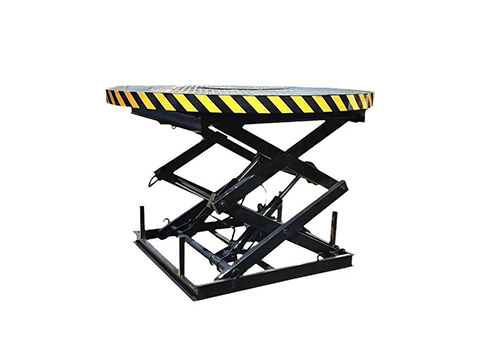
Hydraulic lifts are generally less expensive to purchase and install than mechanical lifts, and while both types of lifts offer safe and efficient vertical lift options, each has specific attributes that make it a better choice than others for certain lifting applications.
If your lifting application requires moving materials to a second level 15 feet to 22 feet above the ground, and you do not require a continuous lift cycle, a hydraulic lift may be the right choice for you. Hydraulic lifts are limited to 10 lifts/hour and 100 lifts/day, and have lower payload capacities than mechanical lifts. Additionally, hydraulic VRCs are prohibited in certain environments due to the toxicity of hydraulic fluid.
Among them, hydraulics play an important role in power generation, transmission control, etc. As far as the elevator mechanism is concerned, hydraulics is an important choice used in the elevator industry.
This system is widely adopted and installed in residential places due to its simple performance. Hydraulic lifts are not suspended and are therefore the safest among all uses.
These lifts basically use a pump that draws the liquid from the tank and injects it forcefully into the cylinders. In these cylinders, the piston works to push the liquid into the cylinders.
Hydraulic elevators basically use a pump driven by an incompressible fluid.
When a signal is sent to the control system to lower the elevator, it allows the fluid to flow back into the reservoir and allows the weight of the elevator car to lower the piston.
The design of these elevators is very simple and effective.
These elevators are also known as rope elevators. These elevators are mostly designed for modern construction projects.
Hydraulic lifts basically use pressurized fluid to push the car up along the shaft. On the other hand, mechanical elevators are also known as rope elevators.
These are basically used in most modern construction projects.
Hydraulic elevator systems use pressurized fluid to push the car up along the shaft, while mechanical elevator systems use electric motors, a series of ropes, and counterweights to move the elevator car from one floor to another.
The rope is connected to the elevator car on one hand and is suspended on the other side of the hoistway.
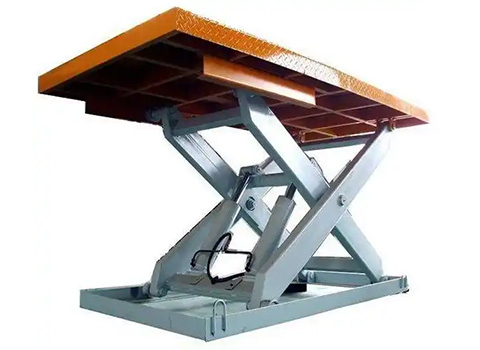
In mechanical elevator systems, counterweights save energy by reducing the force required to raise the elevator. In mechanical elevators, we use counterweights along with the car which is placed on the track inside the elevator.
It helps to keep them in place while the system is running.
RELATED NEWS
2026-03-31
Why Is Predictive Maintenance Gaining Traction for Hydraulic Systems?
Predictive maintenance is rapidly gaining traction in the management of hydraulic systems due to its ability to reduce unplanned downtime, extend equipment life, and optimize operational efficiency. Hydraulic systems, which rely on pressuri···
2026-03-31
How to Improve the Efficiency of a Hydraulic System?
Improving the efficiency of a hydraulic system is essential for reducing energy consumption, lowering operational costs, and extending the lifespan of equipment. Hydraulic systems are widely used in industries like manufacturing, constructi···
2026-03-24
Why Is Heat Resistance Critical in Metallurgical Electric Furnace Hydraulic Cylinders?
Heat resistance is a critical property for hydraulic cylinders used in metallurgical electric furnaces. These cylinders are key components in controlling furnace doors, tilting mechanisms, and other heavy operations, often operating in envi···
2026-03-24
How Does a Metallurgical Electric Furnace Hydraulic Cylinder Handle High Heat?
In metallurgical processes, electric furnaces operate at extremely high temperatures, often exceeding 1,500°C. Hydraulic cylinders used in these furnaces play a critical role in controlling doors, tilting mechanisms, or other moving parts,···
2026-03-17
How Do Hydraulic Cylinders Improve Safety in Railway Equipment Operations?
Hydraulic cylinders play a crucial role in enhancing safety in railway equipment operations. These devices convert hydraulic energy into linear mechanical force, enabling precise and reliable movement of heavy railway machinery, such as tra···
2026-03-17
How to Maintain Hydraulic Cylinders for Railway Equipment?
Hydraulic cylinders are critical components in railway equipment, enabling smooth movement and heavy lifting in applications such as track maintenance machines, train doors, and suspension systems. Proper maintenance ensures safety, extends···

GET YOUR FREE QUOTE
We will contact you within 24 hours. ( WhatsApp/facebook:13665121168)