Welcome to WUXI DAHONG HYDRAULIC PNEUMENT CO.,LTD
WhatsApp: 13665121168 Email: shaominjiao@wxdahong.com


What are the basics of hydraulic systems
Release Time :
2025-02-05
Hydraulic systems can be either open center or closed center systems. An open center system is one in which there is fluid flow but no pressure in the system when the actuator is idle. The pump circulates the fluid from the reservoir through the selector valve and back to the reservoir. An open center system can employ any number of subsystems, each with a selector valve. The selector valves of an open center system are always connected in series with each other. In this arrangement, the system pressure line passes through each selector valve. Fluid is always free to pass through each selector valve and return to the reservoir until one of the selector valves is positioned to operate the mechanism. When one of the selector valves is positioned to operate the actuator, fluid is directed from the pump through one of the work lines to the actuator. When the selector valve is in this position, the flow of fluid through the valve to the reservoir is blocked. Pressure in the system builds up to overcome resistance and move the piston of the actuator cylinder; fluid from the other end of the actuator returns to the selector valve and flows back to the reservoir. The operation of the system after the components are activated depends on the type of selector valve used.
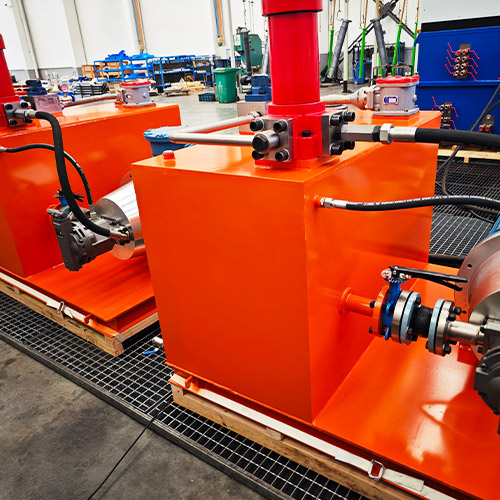
In a closed center system, the fluid is under pressure as long as the power pump is running. There are multiple actuators arranged in parallel, with several actuator units operating simultaneously while some others are not. This system differs from the open center system in that the selectors or directional control valves are arranged in parallel rather than in series. In the closed center system, the way the pump pressure is controlled varies. If a fixed displacement pump is used, the system pressure is regulated by a pressure regulator. If the regulator fails, a relief valve serves as a backup safety device. If a variable displacement pump is used, the system pressure is controlled by the pump's integrated pressure mechanism compensator system. The compensator automatically varies the volume output. When the pressure approaches the normal system pressure, the compensator begins to reduce the pump's flow output. When the normal system pressure is reached, the pump is fully compensated (close to zero flow). When the pump is in this fully compensated state, its internal bypass mechanism provides fluid circulation through the pump for cooling and lubrication. A relief valve is installed in the system as a safety backup.
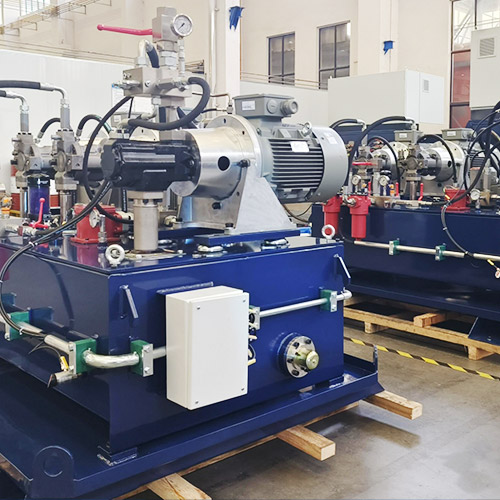
The advantage of the open center system over the closed center system is that the system does not need to be continuously pressurized. Since the pressure is gradually built up after the selector valve is moved to the working position, the impact of pressure fluctuations is small. This action makes the operation of the actuator smoother. The operation is slower than a closed center system where pressure is available as soon as the selector valve is positioned.
RELATED NEWS
2026-03-31
Why Is Predictive Maintenance Gaining Traction for Hydraulic Systems?
Predictive maintenance is rapidly gaining traction in the management of hydraulic systems due to its ability to reduce unplanned downtime, extend equipment life, and optimize operational efficiency. Hydraulic systems, which rely on pressuri···
2026-03-31
How to Improve the Efficiency of a Hydraulic System?
Improving the efficiency of a hydraulic system is essential for reducing energy consumption, lowering operational costs, and extending the lifespan of equipment. Hydraulic systems are widely used in industries like manufacturing, constructi···
2026-03-24
Why Is Heat Resistance Critical in Metallurgical Electric Furnace Hydraulic Cylinders?
Heat resistance is a critical property for hydraulic cylinders used in metallurgical electric furnaces. These cylinders are key components in controlling furnace doors, tilting mechanisms, and other heavy operations, often operating in envi···
2026-03-24
How Does a Metallurgical Electric Furnace Hydraulic Cylinder Handle High Heat?
In metallurgical processes, electric furnaces operate at extremely high temperatures, often exceeding 1,500°C. Hydraulic cylinders used in these furnaces play a critical role in controlling doors, tilting mechanisms, or other moving parts,···
2026-03-17
How Do Hydraulic Cylinders Improve Safety in Railway Equipment Operations?
Hydraulic cylinders play a crucial role in enhancing safety in railway equipment operations. These devices convert hydraulic energy into linear mechanical force, enabling precise and reliable movement of heavy railway machinery, such as tra···
2026-03-17
How to Maintain Hydraulic Cylinders for Railway Equipment?
Hydraulic cylinders are critical components in railway equipment, enabling smooth movement and heavy lifting in applications such as track maintenance machines, train doors, and suspension systems. Proper maintenance ensures safety, extends···

GET YOUR FREE QUOTE
We will contact you within 24 hours. ( WhatsApp/facebook:13665121168)