Welcome to WUXI DAHONG HYDRAULIC PNEUMENT CO.,LTD
WhatsApp: 13665121168 Email: shaominjiao@wxdahong.com


How Does Our Hydraulic Cylinder Enhance Metallurgical Electric Furnace Control?
Release Time :
2026-01-15
In metallurgical electric furnace systems—such as electric arc furnaces (EAF), submerged arc furnaces, and resistance furnaces—precise mechanical control plays a critical role in ensuring stable operation, energy efficiency, and equipment longevity. Among the key mechanical components, the hydraulic cylinder is widely used for tasks including electrode lifting, furnace cover movement, tilting operations, and auxiliary positioning systems.
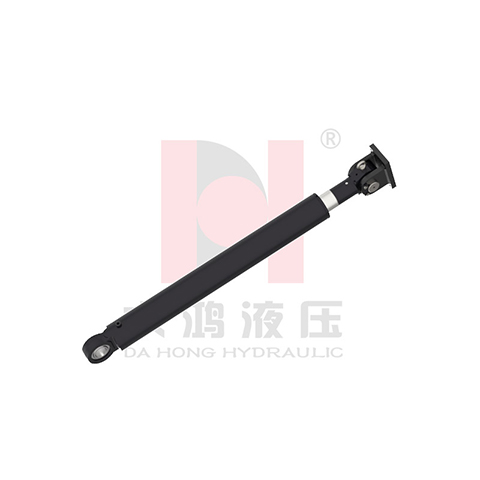
This article explains how hydraulic cylinders contribute to improved control of metallurgical electric furnaces, from a technical and operational perspective, focusing on reliability, precision, and system integration rather than promotional claims.
The Role of Mechanical Control in Electric Furnaces
Electric furnaces operate under extreme conditions: high temperatures, fluctuating electrical loads, and continuous mechanical stress. While electrical and automation systems regulate power input and process logic, mechanical actuators determine how accurately those commands are executed.
Key control functions that depend on mechanical systems include:
Electrode positioning and pressure control
Furnace shell or cover movement
Tilting and tapping operations
Adjustment of charging or sealing mechanisms
Hydraulic cylinders are commonly selected for these functions due to their high force output, controllability, and robustness.
Why Hydraulic Cylinders Are Used in Furnace Control Systems
1. High Load Capacity in Compact Designs
Metallurgical furnaces often require the movement of heavy components—such as electrodes, furnace lids, or structural frames—within limited space. Hydraulic cylinders can generate large linear forces relative to their size, making them suitable for confined industrial layouts.
This capability allows designers to:
Maintain compact furnace structures
Reduce mechanical complexity compared with large gear or screw systems
Handle static and dynamic loads safely
2. Precise Linear Motion for Process Stability
In electrode regulation systems, small positional changes can significantly affect arc stability, power consumption, and furnace efficiency. Hydraulic cylinders, when combined with proportional or servo valves and position sensors, enable smooth and controllable linear motion.
This contributes to:
More stable arc behavior
Reduced mechanical shock during adjustments
Improved consistency in furnace operation
Importantly, the cylinder itself does not control the process independently; instead, it accurately executes commands from the control system, ensuring mechanical response matches electrical regulation logic.
3. Smooth Operation Under Harsh Conditions
Metallurgical environments expose equipment to dust, vibration, heat, and occasional impact loads. Hydraulic cylinders designed for industrial furnace applications typically feature:
Reinforced seals suitable for high-temperature surroundings
Surface treatments on piston rods to resist wear and corrosion
Structural designs that tolerate misalignment and vibration
These characteristics help maintain stable mechanical performance even when environmental conditions are unfavorable.
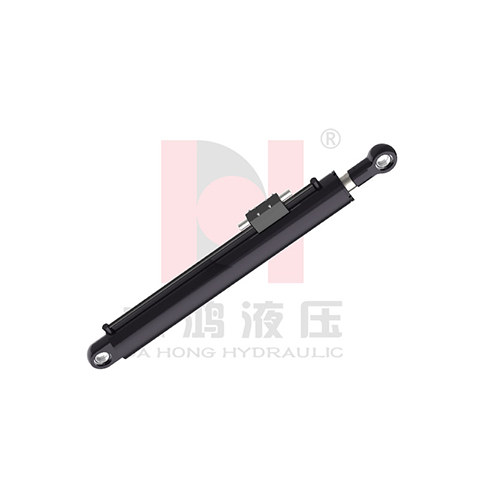
Contribution to Electrode Control Systems
Electrode lifting and lowering is one of the most critical control functions in electric furnaces. Hydraulic cylinders support this function by providing:
Responsive movement during arc ignition and stabilization
Controlled holding force to maintain electrode position
Damping characteristics that reduce oscillation compared with purely mechanical systems
When integrated with sensors and control algorithms, hydraulic actuation allows the furnace to respond more effectively to changes in arc length and furnace load, supporting overall process stability.
RELATED NEWS
2026-03-31
Why Is Predictive Maintenance Gaining Traction for Hydraulic Systems?
Predictive maintenance is rapidly gaining traction in the management of hydraulic systems due to its ability to reduce unplanned downtime, extend equipment life, and optimize operational efficiency. Hydraulic systems, which rely on pressuri···
2026-03-31
How to Improve the Efficiency of a Hydraulic System?
Improving the efficiency of a hydraulic system is essential for reducing energy consumption, lowering operational costs, and extending the lifespan of equipment. Hydraulic systems are widely used in industries like manufacturing, constructi···
2026-03-24
Why Is Heat Resistance Critical in Metallurgical Electric Furnace Hydraulic Cylinders?
Heat resistance is a critical property for hydraulic cylinders used in metallurgical electric furnaces. These cylinders are key components in controlling furnace doors, tilting mechanisms, and other heavy operations, often operating in envi···
2026-03-24
How Does a Metallurgical Electric Furnace Hydraulic Cylinder Handle High Heat?
In metallurgical processes, electric furnaces operate at extremely high temperatures, often exceeding 1,500°C. Hydraulic cylinders used in these furnaces play a critical role in controlling doors, tilting mechanisms, or other moving parts,···
2026-03-17
How Do Hydraulic Cylinders Improve Safety in Railway Equipment Operations?
Hydraulic cylinders play a crucial role in enhancing safety in railway equipment operations. These devices convert hydraulic energy into linear mechanical force, enabling precise and reliable movement of heavy railway machinery, such as tra···
2026-03-17
How to Maintain Hydraulic Cylinders for Railway Equipment?
Hydraulic cylinders are critical components in railway equipment, enabling smooth movement and heavy lifting in applications such as track maintenance machines, train doors, and suspension systems. Proper maintenance ensures safety, extends···

GET YOUR FREE QUOTE
We will contact you within 24 hours. ( WhatsApp/facebook:13665121168)