Welcome to WUXI DAHONG HYDRAULIC PNEUMENT CO.,LTD
WhatsApp: 13665121168 Email: shaominjiao@wxdahong.com


How Do Sensors Improve Hydraulic Cylinder Performance?
Release Time :
2025-12-04
Hydraulic cylinders are widely used in construction machinery, industrial automation, agriculture, and material handling equipment. While their basic working principle has remained largely unchanged for decades, sensor technology has brought noticeable improvements to how hydraulic cylinders perform, are monitored, and are maintained.
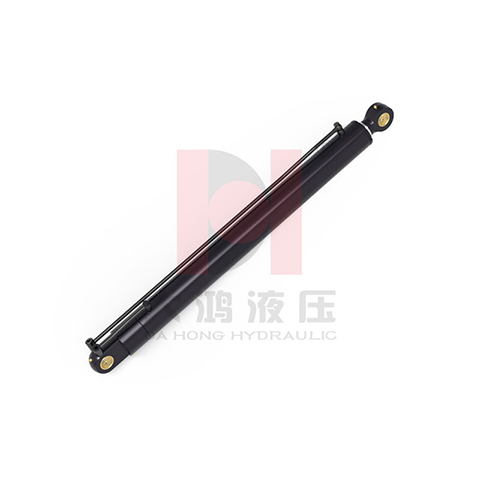
So, how exactly do sensors improve hydraulic cylinder performance? The answer lies in better visibility, control, and decision-making, rather than any unrealistic promise of perfect operation.
The Role of Sensors in Hydraulic Systems
In a traditional hydraulic system, many operating conditions are inferred indirectly—often by pressure readings, operator experience, or scheduled maintenance. Sensors allow these conditions to be measured directly and continuously.
Common sensors used with hydraulic cylinders include:
Position sensors
Pressure sensors
Temperature sensors
Load or force sensors
Each type provides a different piece of information, and together they help create a clearer picture of what the cylinder is actually doing during operation.
Key Ways Sensors Improve Hydraulic Cylinder Performance
1. More Accurate Position Control
Position sensors provide real-time feedback on piston or rod movement. This enables more precise control, especially in applications requiring accurate positioning or repeatable motion.
In simple terms, the system no longer has to guess where the cylinder is—it knows. This reduces overshoot, improves consistency, and helps protect mechanical components.
2. Improved Load and Pressure Monitoring
Pressure and force sensors help monitor the actual load applied to the cylinder. This allows control systems to adjust operating parameters to avoid overload conditions.
While sensors cannot prevent all mechanical stress, they do help operators and automated systems respond faster when something is not quite right.
3. Early Detection of Abnormal Conditions
Changes in pressure, temperature, or movement patterns can indicate developing problems such as internal leakage, seal wear, or misalignment.
By identifying these trends early, sensors support condition-based maintenance rather than relying only on fixed service intervals. In everyday language: it’s easier to fix small issues before they turn into big ones.
4. Increased Operational Efficiency
With accurate sensor feedback, hydraulic systems can be tuned to operate closer to their optimal range. This may reduce unnecessary energy loss, heat generation, and excessive wear.
The result is not instant efficiency miracles, but incremental improvements that add up over time, especially in high-duty applications.
5. Better Data for System Optimization
Sensors generate data that engineers and maintenance teams can analyze to improve system design, control strategies, and component selection.
This data-driven approach supports continuous improvement and helps avoid decisions based solely on assumptions or past habits.
Practical Considerations and Limitations
It is important to be realistic about what sensors can and cannot do:
Sensors do not replace proper hydraulic design
They do not eliminate the need for regular maintenance
Incorrect sensor installation or calibration can reduce accuracy
Harsh environments may require additional protection for sensors
In other words, sensors are tools—not shortcuts. They work best when integrated thoughtfully into a well-designed hydraulic system.
Are Sensors Worth Adding to Hydraulic Cylinders?
For applications involving:
Precision motion control
Automated or semi-automated systems
High-value equipment
Predictive or condition-based maintenance
Sensors often provide clear benefits. In simpler or low-duty systems, the added complexity may not always be necessary. The value depends on operational requirements, not on technology trends alone.
Conclusion
Sensors improve hydraulic cylinder performance by providing accurate, real-time information about position, pressure, load, and operating conditions. This information enables better control, early fault detection, and more informed maintenance decisions.
To put it plainly: sensors don’t make hydraulic cylinders “perfect,” but they do make them smarter, more predictable, and easier to manage—and that’s a meaningful improvement in modern hydraulic systems.
RELATED NEWS
2026-03-31
Why Is Predictive Maintenance Gaining Traction for Hydraulic Systems?
Predictive maintenance is rapidly gaining traction in the management of hydraulic systems due to its ability to reduce unplanned downtime, extend equipment life, and optimize operational efficiency. Hydraulic systems, which rely on pressuri···
2026-03-31
How to Improve the Efficiency of a Hydraulic System?
Improving the efficiency of a hydraulic system is essential for reducing energy consumption, lowering operational costs, and extending the lifespan of equipment. Hydraulic systems are widely used in industries like manufacturing, constructi···
2026-03-24
Why Is Heat Resistance Critical in Metallurgical Electric Furnace Hydraulic Cylinders?
Heat resistance is a critical property for hydraulic cylinders used in metallurgical electric furnaces. These cylinders are key components in controlling furnace doors, tilting mechanisms, and other heavy operations, often operating in envi···
2026-03-24
How Does a Metallurgical Electric Furnace Hydraulic Cylinder Handle High Heat?
In metallurgical processes, electric furnaces operate at extremely high temperatures, often exceeding 1,500°C. Hydraulic cylinders used in these furnaces play a critical role in controlling doors, tilting mechanisms, or other moving parts,···
2026-03-17
How Do Hydraulic Cylinders Improve Safety in Railway Equipment Operations?
Hydraulic cylinders play a crucial role in enhancing safety in railway equipment operations. These devices convert hydraulic energy into linear mechanical force, enabling precise and reliable movement of heavy railway machinery, such as tra···
2026-03-17
How to Maintain Hydraulic Cylinders for Railway Equipment?
Hydraulic cylinders are critical components in railway equipment, enabling smooth movement and heavy lifting in applications such as track maintenance machines, train doors, and suspension systems. Proper maintenance ensures safety, extends···

GET YOUR FREE QUOTE
We will contact you within 24 hours. ( WhatsApp/facebook:13665121168)