Welcome to WUXI DAHONG HYDRAULIC PNEUMENT CO.,LTD
WhatsApp: 13665121168 Email: shaominjiao@wxdahong.com


Comparative study of forearm oil cylinder and other oil cylinders
Release Time :
2024-07-03
In construction machinery, construction machinery, and various heavy equipment, the oil cylinder plays a crucial role as a key executive component. Among them, the forearm oil cylinder has significant differences in design, structure, and working principle compared to other types of oil cylinders due to its specific application scenarios and functional characteristics. This article will compare and study the characteristics and applications of the forearm oil cylinder with other oil cylinders, in order to gain a more comprehensive understanding.

1、 Overview of forearm oil cylinder
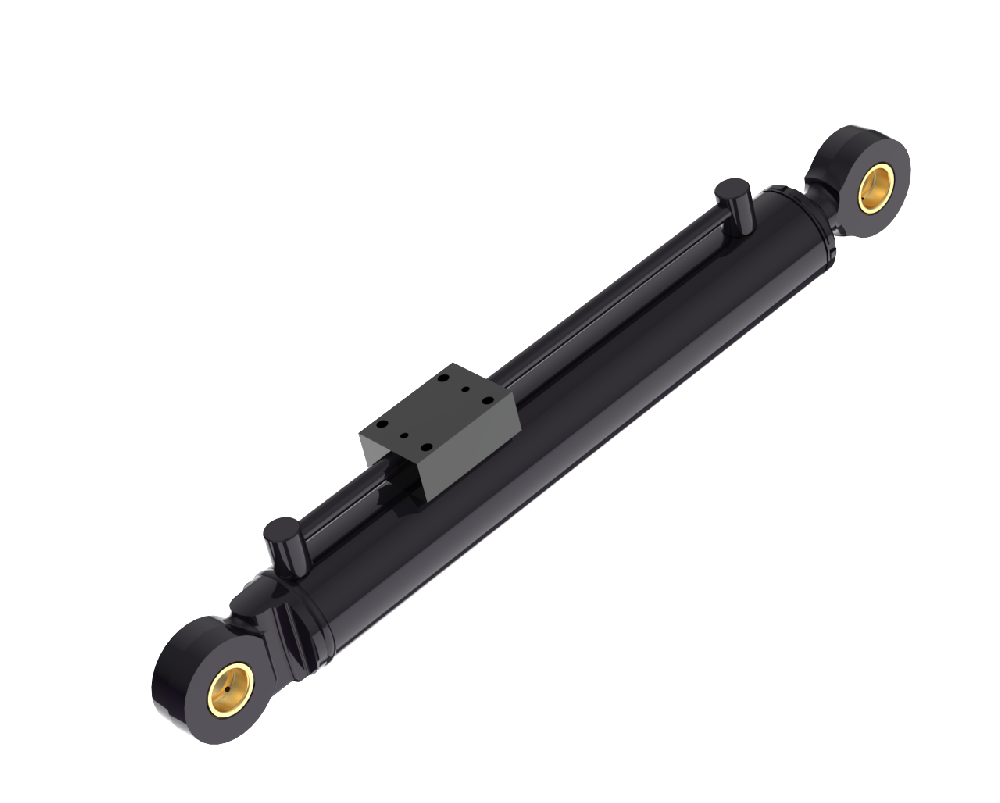
The forearm oil cylinder is a key component in construction machinery such as excavators and loaders, mainly responsible for controlling the telescopic and lifting actions of the forearm. It usually includes core components such as the cylinder body, piston rod, and seal, which drive the piston rod to move back and forth through the pressure of the oil, thereby achieving the extension and lifting of the forearm. The structure of the forearm oil cylinder is compact, able to withstand large working loads, and can still maintain stable performance in harsh working environments.
2、 Overview of other types of oil cylinders
In addition to the forearm oil cylinder, there are various other types of oil cylinders widely used in various fields. These oil cylinders vary in structure, working principle, and application depending on the usage scenario and functional requirements. For example, hydraulic cylinders generate power through the flow of hydraulic oil, driving the piston to move; The pneumatic cylinder uses air pressure as the power source; The electric oil cylinder, on the other hand, drives the piston movement through mechanisms such as screws driven by an electric motor.
3、 Comparison between forearm oil cylinder and other oil cylinders
Structural design: The structural design of the forearm oil cylinder is relatively compact to meet the compact layout requirements of construction machinery. Other types of oil cylinders, such as hydraulic cylinders, place greater emphasis on universality and modularity in their design to adapt to a wider range of application scenarios.
Working principle: The forearm oil cylinder drives the piston to move back and forth through the pressure of the oil, achieving the extension and lifting of the forearm. The hydraulic cylinder generates power through the flow of hydraulic oil, driving the piston to move. Pneumatic oil cylinders and electric oil cylinders respectively use air pressure and electric motors as power sources.
Application scenario: The forearm oil cylinder is mainly used in construction machinery such as excavators and loaders to control the extension and lifting of the forearm. Hydraulic cylinders are widely used in various heavy machinery equipment, ships, aerospace and other fields. Pneumatic cylinders are commonly used in industries such as automotive manufacturing, food processing, and packaging machinery. Electric oil cylinders are gradually being applied in the field of industrial automation due to their ease of control and maintenance.
Performance characteristics: The forearm oil cylinder has high load-bearing capacity and stability, and can maintain stable performance in harsh working environments. And hydraulic cylinders have the characteristics of small volume, large torque, and flexible action. Pneumatic oil cylinders have the characteristics of fast response speed, low noise, and cleanliness and hygiene. Electric oil cylinders have the advantage of being easy to control and maintain.
4、 Conclusion
By comparing the forearm oil cylinder with other oil cylinders, we can see that there are significant differences in structure, working principle, application scenarios, and performance characteristics among different types of oil cylinders. As a key component in construction machinery, the forearm oil cylinder has been widely used in construction machinery such as excavators and loaders due to its compact structural design, stable performance characteristics, and ability to adapt to harsh working environments. Other types of oil cylinders, on the other hand, play important roles in various fields based on their specific application scenarios and functional requirements. In the future development, with the continuous progress of technology and the expansion of application fields, various types of oil cylinders will be more widely used and developed.
RELATED NEWS
2026-03-31
Why Is Predictive Maintenance Gaining Traction for Hydraulic Systems?
Predictive maintenance is rapidly gaining traction in the management of hydraulic systems due to its ability to reduce unplanned downtime, extend equipment life, and optimize operational efficiency. Hydraulic systems, which rely on pressuri···
2026-03-31
How to Improve the Efficiency of a Hydraulic System?
Improving the efficiency of a hydraulic system is essential for reducing energy consumption, lowering operational costs, and extending the lifespan of equipment. Hydraulic systems are widely used in industries like manufacturing, constructi···
2026-03-24
Why Is Heat Resistance Critical in Metallurgical Electric Furnace Hydraulic Cylinders?
Heat resistance is a critical property for hydraulic cylinders used in metallurgical electric furnaces. These cylinders are key components in controlling furnace doors, tilting mechanisms, and other heavy operations, often operating in envi···
2026-03-24
How Does a Metallurgical Electric Furnace Hydraulic Cylinder Handle High Heat?
In metallurgical processes, electric furnaces operate at extremely high temperatures, often exceeding 1,500°C. Hydraulic cylinders used in these furnaces play a critical role in controlling doors, tilting mechanisms, or other moving parts,···
2026-03-17
How Do Hydraulic Cylinders Improve Safety in Railway Equipment Operations?
Hydraulic cylinders play a crucial role in enhancing safety in railway equipment operations. These devices convert hydraulic energy into linear mechanical force, enabling precise and reliable movement of heavy railway machinery, such as tra···
2026-03-17
How to Maintain Hydraulic Cylinders for Railway Equipment?
Hydraulic cylinders are critical components in railway equipment, enabling smooth movement and heavy lifting in applications such as track maintenance machines, train doors, and suspension systems. Proper maintenance ensures safety, extends···

GET YOUR FREE QUOTE
We will contact you within 24 hours. ( WhatsApp/facebook:13665121168)